Cut Broccoli Without the Mess: Easy Florets & Zero Waste
For many home cooks, tackling a whole head of broccoli can feel like a culinary challenge. You might have found yourself "hacking" at it, leaving a cutting board strewn with tiny green buds, inconsistent florets, and a surprising amount of waste. The good news? Preparing this incredibly healthy and versatile vegetable doesn't have to be a frustrating, messy ordeal. There’s a smarter, cleaner, and more efficient way to transform a humble broccoli crown into beautiful, perfectly sized florets, all while ensuring you get the most out of every stalk.
This guide will walk you through a method that not only minimizes mess but also embraces a zero-waste philosophy, recognizing that nearly every part of the broccoli head is edible and delicious. Say goodbye to scattered green debris and hello to perfectly portioned florets ready for roasting, steaming, stir-frying, or enjoying raw.
Why a Smarter Way to Cut Broccoli Matters
Before we dive into the how-to, let's understand why shifting your broccoli cutting technique can make such a difference. The traditional approach often involves slicing directly through the dense crown, inevitably shattering the delicate florets and scattering those little green "buds" everywhere. This not only creates a substantial mess but also leads to an inconsistent texture and potentially wasted edible portions.
A refined technique, however, offers several key advantages:
*
Minimize Mess: The primary culprit for mess is cutting through the floret heads. By focusing your knife on the stems, you preserve the integrity of the delicate green tops, keeping your cutting board much cleaner.
*
Reduce Waste: Many people mistakenly believe the broccoli stem isn't edible. In reality, the tender inner core of the main stem and the smaller stems attached to the florets are packed with flavor and nutrients. This method ensures you utilize these often-discarded parts.
*
Consistent Florets: Whether you need large, medium, or bite-sized pieces, this approach allows you to achieve uniform florets, which cook more evenly and look more appealing in your dishes.
*
Efficiency: Once you master the technique, you'll find it's remarkably fast, saving you precious time in the kitchen.
*
Enhanced Flavor and Texture: By preserving the florets and utilizing the tender stems, you maximize the delicious crunch and earthy flavor of the entire vegetable.
Your Essential Tools for a Clean Cut
You don't need fancy gadgets to cut broccoli like a pro. Just a couple of basics will suffice:
*
A Sharp Chef's Knife: This is your most important tool. A sharp knife makes clean cuts effortlessly and is actually safer than a dull one, which can slip.
*
A Sturdy Cutting Board: A stable surface is crucial for safety and efficiency.
*
Your Hands: Believe it or not, your hands will play a significant role in separating florets cleanly.
Before you begin, remember to rinse your whole head of broccoli thoroughly under cool water to remove any dirt or debris.
Step-by-Step Guide: How to Cut Broccoli Without the Mess
The secret to mess-free broccoli lies in understanding its structure: the delicate florets sprout from tougher, central stems. By working with the stems rather than against the florets, you unlock a cleaner, more efficient cutting experience.
Step 1: Detach the Main Florets (Preserving the Good Stem)
Begin by holding the broccoli head with the main stem facing upwards on your cutting board. Your goal in this first step is to liberate the larger florets from the thick, central stalk.
1.
Identify the Junctions: Observe where the main florets connect to the thick central stem.
2.
Make Downward Incisions: Using your sharp knife, make careful downward cuts around the circumference of the thick central stem. Aim to slice through the individual stems that attach the florets to the core.
3.
Preserve the Tender Stem: As you cut, ensure you leave about 1 inch of the tender stem attached to each floret. This part of the stem is perfectly edible, slightly sweet, and offers a delightful crunch. Don't throw it away!
4.
Separate All Florets: Continue this process, rotating the broccoli head as needed, until all the larger florets are separated from the tough, woody central stem.
What to do with the main stem? Don't discard it! The outer layer of the thick central stem can be tough and fibrous, but the inner core is tender and delicious. Simply peel the outer layer with a vegetable peeler until you reach the lighter, softer interior. You can then dice it for stir-fries, thinly slice it for salads, or even add it to vegetable stock for extra flavor and nutrients.
Step 2: Halving Larger Florets – The "Pull-Apart" Trick
Now you'll have a collection of florets, some of which might be perfectly sized, while others are still quite large and unwieldy. This step focuses on reducing the size of those larger florets without creating a mess. The key is to avoid cutting through the dark green bud section.
1.
Orient the Floret: Take a large floret and hold it with the stem facing upwards on your cutting board.
2.
Make a Partial Incision: Carefully make a vertical incision downwards through the center of the stem, extending about 1/2 to 1 inch into the stem. Crucially, do not cut all the way through the green buds.
3.
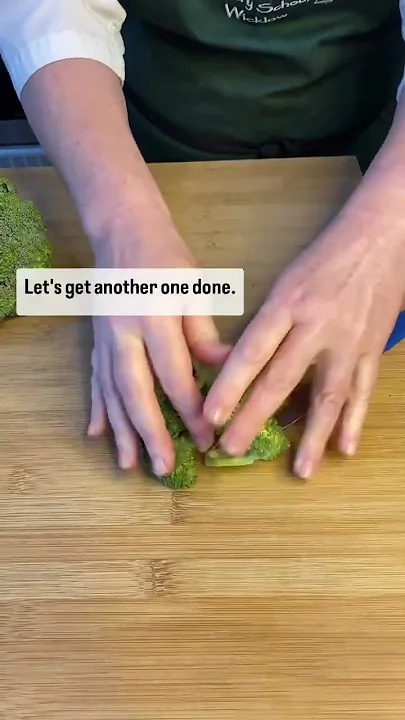
The "Pull-Apart": Once you’ve made the incision, use your hands to gently grab each half of the stem and pull the floret apart. You’ll notice it naturally splits along its growth lines, yielding two perfectly sized florets with minimal, if any, stray bits.
4.
Repeat if Necessary: If you started with a particularly massive floret, you might need to repeat this process on one or both halves until you achieve your desired size – typically aiming for florets with about 1 square inch of dark green buds on top.
This "pull-apart" method is genius because it leverages the natural structure of the broccoli, creating clean breaks where the stem naturally divides, rather than forcibly slicing through the delicate top.
Step 3: Creating Bite-Size Pieces & Maximizing Edible Parts
Sometimes, you need even smaller florets – perfect for sneaking into kid-friendly meals like
mac and cheese, adding to a quick stir-fry, or for raw snacking. This technique builds on the previous steps.
1.
Isolate the Stem: Take a floret (either a whole large one or one you've already halved) and carefully cut the stem off very close to the base, where the green buds begin to form. You're essentially creating a small "tree top."
2.
Partial Incision, Then Pull: Hold the detached floret upside down on your cutting board. Make a small, careful slice partway into the base of the floret, where the stem used to be.
3.
Divide by Hand: Again, use your hands to gently pull the floret apart along the incision. You may need to make several small incisions and pull apart multiple times for one larger floret, depending on how small you need the pieces to be.
4.
Don't Forget the Small Stems: The little stems you cut off in step 1 and step 3 are also tender and packed with flavor! Dice them and add them to your cooking alongside the florets.
This iterative process of small cuts and pulling ensures you get consistent, small pieces without pulverizing the florets. For a more comprehensive look at achieving various sizes, check out our guide on
How to Cut Broccoli Florets: A Step-by-Step, No-Waste Guide.
Beyond the Florets: Embracing Zero Waste Broccoli
One of the most satisfying aspects of this cutting method is its commitment to zero waste. Broccoli is a nutritional powerhouse, rich in vitamins C and K, fiber, and antioxidants, and almost every part of it is delicious.
*
The Florets: These are your versatile stars. Roast them with olive oil, garlic, and a pinch of salt; steam them until tender-crisp; sauté them in stir-fries; or enjoy them raw with your favorite dip.
*
The Tender Stems (attached to florets): These cook at a similar rate to the florets and add a lovely textural contrast. Don't trim them too short!
*
The Main Stem (peeled inner core): As mentioned, once peeled, this part can be surprisingly tender and sweet. Thinly slice it for salads or coleslaw, dice it for sautés, or even spiralize it for "broccoli noodles." It can also be a fantastic addition to vegetable broths.
By adopting this mindful approach to cutting broccoli, you not only elevate your cooking experience by creating less mess and more uniform results, but you also honor the entire vegetable, ensuring no nutritious and flavorful part goes to waste.
Conclusion
Cutting broccoli doesn't have to be a dreaded kitchen task. By learning to work with the vegetable's natural structure – focusing your knife on the stems and using a smart "pull-apart" technique – you can easily create beautiful, consistent florets with virtually no mess and minimal waste. Embrace the entire broccoli head, from its vibrant green florets to its tender inner stem, and unlock a world of culinary possibilities. Give this method a try, and you might just find that cutting broccoli becomes one of your favorite kitchen rituals.